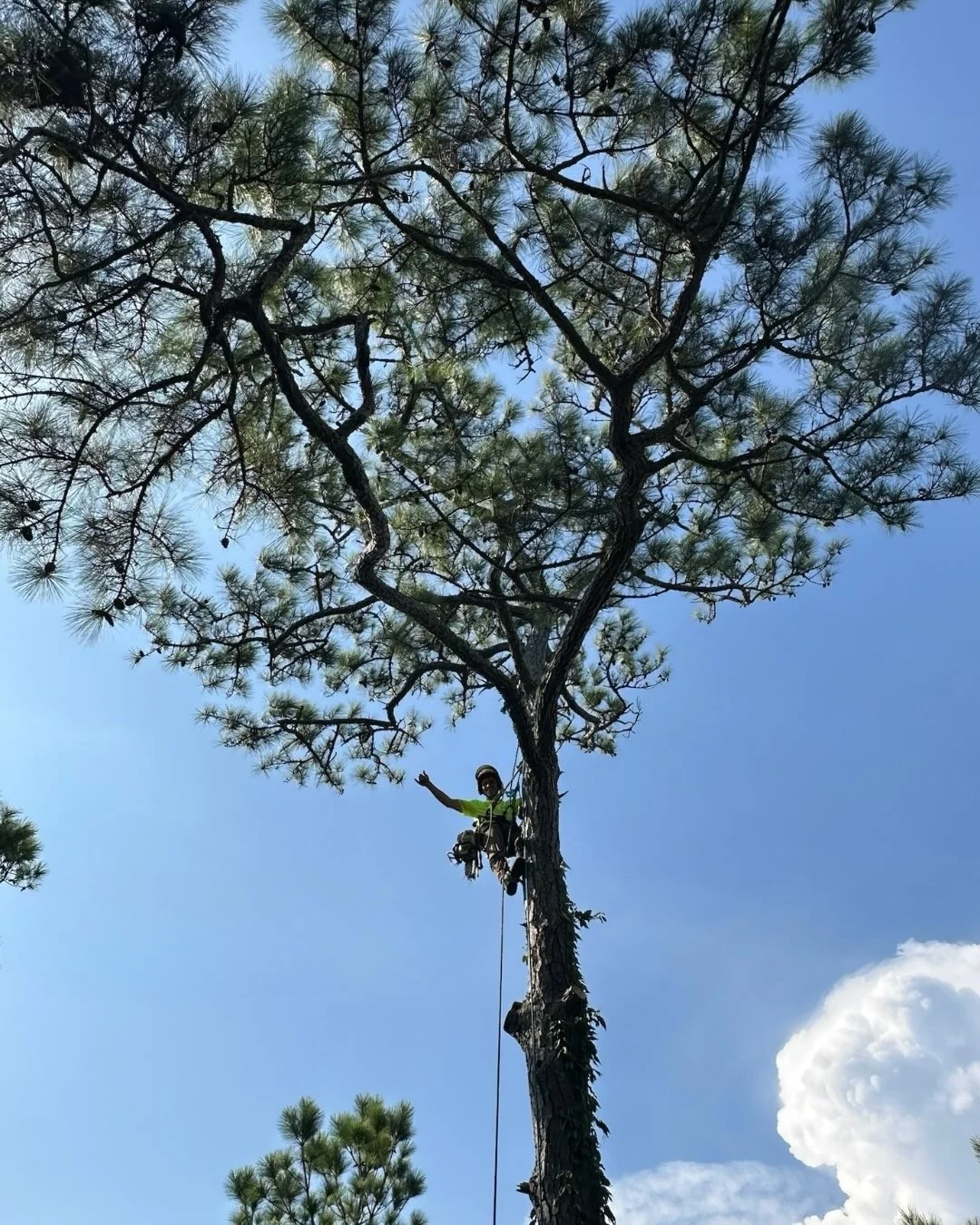
Tree Trimming & Pruning
in the Outer Banks, NC
Trimming is how we save trees people would otherwise cut down. Altura calls a good fine prune "giving it a facelift": lighter limbs, a cleaner shape, and a healthier tree.
Keep the tree. Get your space back.
Altura Tree Service trims and prunes trees across the Outer Banks, so they stay off your house, keep your view open, and stay standing for years. Most of our trimming calls come from vacation homeowners with limbs on the roof, waterfront owners losing their view of the sound, and full-time residents whose yard has grown in around them.
If you're not sure a trim is enough, compare trimming, removal, and hazard work.
Which kind of prune does your property need?
Most of our trimming jobs are one of these six:
Roofline prune: takes limbs back off the house
Arbor prune: a full prune for the tree's health and shape
Vista prune: opens a water view without topping the tree
Privacy buffer: thins the tree line between neighbors and keeps the screen
Lift prune: raises the low limbs so you can mow underneath
De-vine: pulls vines out of the canopy
How far should limbs stay from the roof?
At least four feet. A branch that clears the roof on a calm day can still cause wear. As Rose explains, the wind can cause "the whole canopy to dip down and then that's going to still swipe your house."
On a raised house, the roofline sits right up in the canopy, so this comes up on almost every property we see. A roofline prune usually buys one to two years before regrowth reaches the roof again.
What is an arbor prune?
It takes out what's weighing the tree down or making it sick, so the rest of it grows stronger. An arbor prune:
- lightens heavy limbs
- removes sucker branches
- takes out dead, dying, and diseased wood
- opens the canopy so air moves through it
Altura’s rule is to never take more than 25 percent of the canopy at once. Take more, and the tree is left can be under more stress, especially in the high heat.
Dead limbs are usually the first thing to go. On one estimate visit, Rose joked that she wouldn't park under a big dead limb "unless you're trying to get some insurance money." The owner turned out to be an insurance agent. Those limbs came off.
Put the clippings back to work.
Altura’s motto is: Nothing goes to waste. Clippings go through the chipper and can go right back under the tree as mulch.
Pro tip: Leave a donut-shaped gap around the base so the root flare stays dry. Bigger limbs can go into a hugelkultur berm on the property.
More room, without clearing everything.
How do you keep a privacy buffer healthy?
Take out the branches that cross and rub, and leave the screen standing. That's what Altura calls a privacy buffer. Rubbing branches wear through each other's bark, and those open wounds are how rot gets in. Thinning crossing and competing branches keeps the line healthy without opening it up.
Can you raise the low limbs so I can mow?
Yes. A lift prune takes the lowest limbs off so a regular mower fits underneath and the yard receives more sunlight. If the ground under the trees has filled in with thick brush and saplings, we can clear that too.
Can you remove vines from the canopy?
Yes. Altura calls it de-vining. Vines like greenbrier and poison ivy climb into the canopy, add weight, and shade out the tree's leaves. We pull them out by hand and cut them at the base so they don't climb back. Poison ivy takes extra care, and it's priced that way.
A better view. A tree worth keeping.
Why not just top the tree?
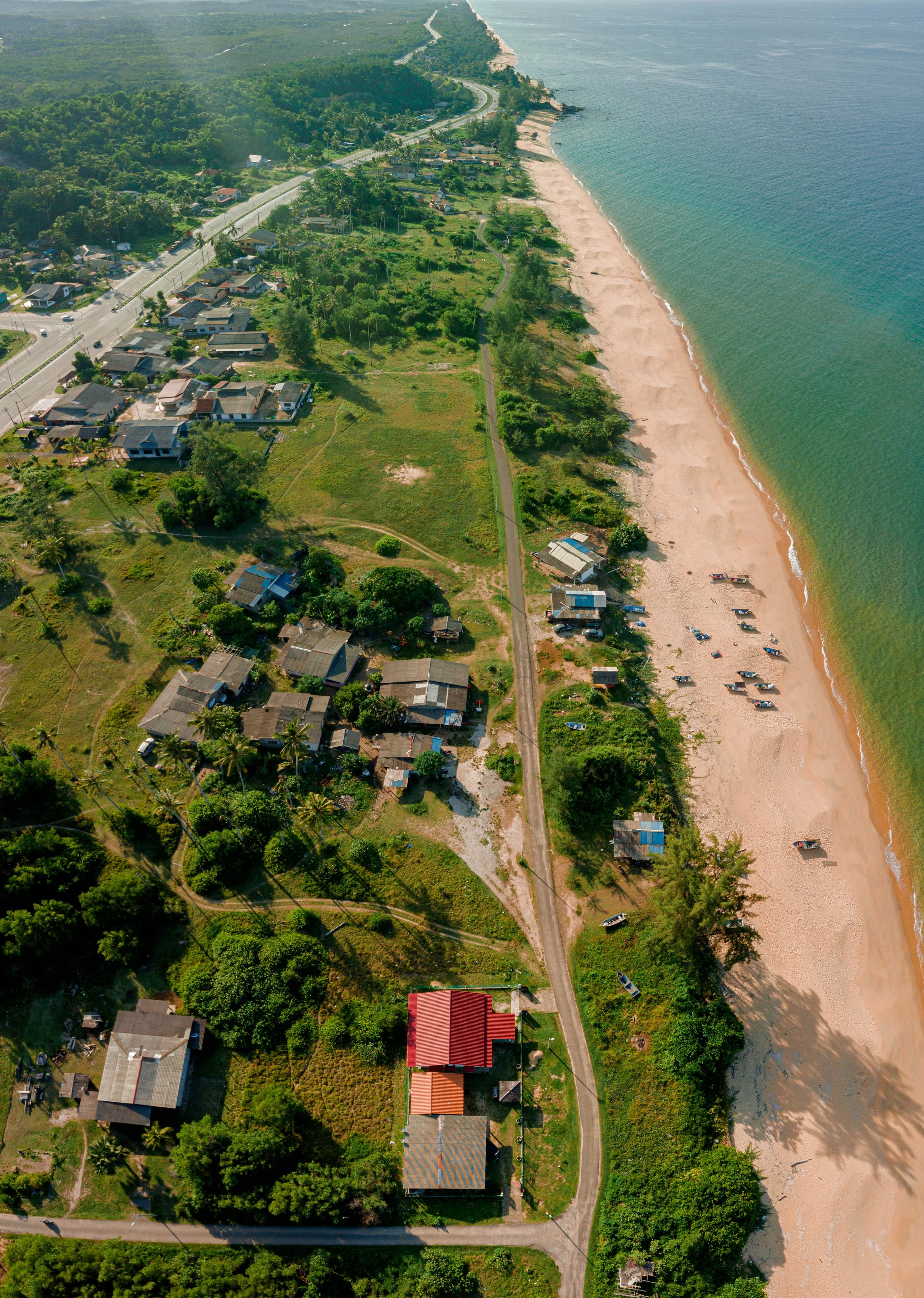
Topping forces the tree to push out a mess of weak branches that grow right back up and break easily. It's common here because so many houses have water views.
What happens after a tree is topped:
- It grows back upward anyway.
- The tree burns energy pushing out sucker branches.
- The new branches don't have the structure to hold up in wind.
- It looks wrong.
The better fix is a vista prune: thin the canopy bonsai-style so you see through the tree instead of over a stump.
If you're in Nags Head, it's more than a looks issue. In the town's special tree districts, the ordinance counts topping as tree removal. And if you're planting for the future, pick trees that stay shorter than your highest balcony so the view never needs cutting.
Send us a photo of the view you want back, and we'll tell you how much of it we can open.
When is the best time to trim?
The dormant season: December, January, and February, before the tree starts putting out new leaves. Trees are healthier when they're pruned then.
Live growth: December through February
Deadwood: any time of year
Rental homes: around guest weeks
Timing around guests matters as much as timing around the tree. Altura has seen owners get a bad review or a complaint because a crew showed up during someone's vacation, and sometimes it was the neighbor's renters who complained. We book around the calendar. If you'd rather not track it yourself, we can put your trees on a yearly schedule.
What does a bad pruning job look like?
Flat cuts, branches cut off halfway, topped trunks, and spike holes up a tree that's supposed to live. Here's what to look for on your own trees:
- Flat cuts. Rose explains: "If it's flat, it will start to catch water. That water will get into the tree and it will start to decay."
- Halfway cuts. A branch cut off in the middle keeps pulling energy from the tree, and whatever grows from the stub won't have much structure. It also looks..weird.
- Topped trunks. See the section above.
- Spike holes. Climbing spikes are for trees coming down. In Rose's words, "you can't spike the tree if you're not going to take it down."
Where should a branch be cut?
Back at the trunk, with a slight angle so rain runs off. Rose puts it plainly: "it's best just to take that branch back to the trunk so that it can heal that wound and focus its energy onto making more desirable branches."
If you're doing it yourself, watch out for juniper and cedar. Their knots can kick a chainsaw back at you, and that's the point to call us.
Can pruning help trees handle the wind?
Yes. A thinned canopy lets wind pass through, and lighter limbs are less likely to snap. It matters most on soundside lots, where Altura sees oaks taking wind and even salt water from high tides. For work timed specifically ahead of hurricane season, see preventative storm pruning.
What affects the cost of tree trimming?
It depends on how tall the trees are, how overgrown they've gotten, and whether our bucket truck can reach them. What moves the price:
Height and reach. When the bucket truck can't get close, the work moves to ladders and pole saws, or to climbing with a harness and lines. Both take longer.
How far it's gone. A tree that's been trimmed every year or two takes less work than one that's been left for ten.
How many trees. Pruning the whole property in one visit is the best value. We bring the equipment once, and Altura’s goal is that you don't have to think about it "for the next year or two."
Access. Pilings, decks, and tight lots slow the work down.
Small single-tree trims usually get paired with other work in the area.
When is trimming not the right answer?
When the tree can't be saved, when it's a safety problem, or when the only goal is cutting the top off. We'll tell you honestly when a trim won't fix it:
- The tree is dead or beetle-killed. Trimming won't bring it back.
- It's cracked, leaning, or lifting at the roots. That's a hazard, and it gets planned differently.
- You only want it topped. We'll show you the vista prune instead.
- It's one small hedge on its own. Sending our equipment out for a single shrub costs you more than it's worth. We'd rather fold it into a bigger visit.
A few more questions
How often should trees on the coast be trimmed?
Every one to two years for most properties. Trees near the roofline or in the wind off the sound may need it closer to every year.
Will trimming hurt my live oak?
Not if it's done right. Prune it in the dormant season and take no more than 25 percent of the canopy. In Nags Head, live oaks are the official town tree and protected, so check with the town before any major work.
Do you use climbing spikes to trim trees?
No, not on trees that are staying. Spikes punch holes through the bark into the living layer underneath. We climb with a harness and lines instead.
Do you trim trees along HOA roads and common areas?
Yes. We work with boards and managers on shared roads, entrances, and common areas. See how we work with HOAs and rental properties.
Tell us what you want back.
Tell us which trees are bothering you and what you want back: the roof, the view, or the yard. We'll walk the property with you and recommend the lightest cut that gets you there.
Estimates are free and done on site, usually in the hour before sunset. We don't use spikes on trees that are staying, we schedule live pruning for the dormant season, and every job is covered by $1 million each in liability, workers' comp, and auto insurance.